
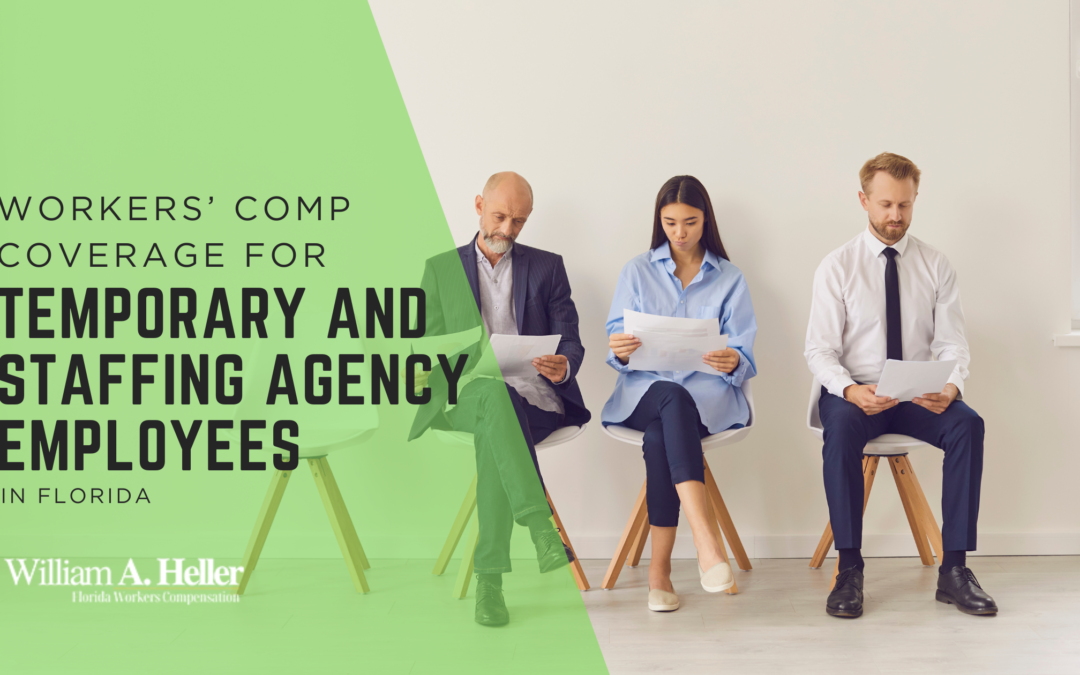
Florida’s workforce relies heavily on temporary staffing agencies, particularly in industries like construction, hospitality, warehousing, and event services common throughout South Florida. Workers placed through these agencies sometimes assume that because they were hired through a third party rather than the company they physically work for, they might not be covered by workers’ compensation if they get hurt. In most cases, that assumption is incorrect.
Under Florida law, staffing agencies are generally considered the employer of record for workers’ compensation purposes. This means the staffing agency, not the client business where the employee is actually working day to day, is typically responsible for carrying workers’ compensation insurance and covering claims when a placed worker is injured on the job. This arrangement is meant to ensure that temporary workers have the same access to benefits as any other employee.
That said, the relationship between a staffing agency and the client company can create real confusion after an injury occurs. Both entities may have some obligations under Florida law, and determining which insurance policy actually responds to a claim can involve a review of the staffing agreement between the two businesses. Workers are sometimes told conflicting information by the staffing agency and the client company about who is responsible for reporting the injury or authorizing treatment.
Because of this, an injured temporary worker should report the injury to both the staffing agency and the on site supervisor at the client company as soon as possible after the accident. Florida’s 30 day reporting requirement applies regardless of how many entities are involved, and providing notice to only one party can create delays if that party is not the one ultimately responsible for the claim.
Documentation becomes especially important in these cases. Keeping records of which staffing agency placed the worker, the specific job site and supervisor involved, and any communication about the injury can help sort out coverage questions if the staffing agency and client company dispute responsibility.
Temporary and seasonal workers sometimes also face questions about how their average weekly wage is calculated, particularly if they worked irregular hours or were placed at multiple job sites in the weeks before the injury. This calculation can significantly affect the amount of wage replacement benefits available and often requires a careful look at pay records from the relevant period.
Workers placed through staffing agencies have the same fundamental rights under Florida workers’ compensation law as directly hired employees, but the layered employment relationship can complicate an otherwise straightforward claim. Attorney William A. Heller represents injured workers across Broward County, including those hurt while working through staffing and temporary agencies. A short consultation can help clarify which company is responsible for a claim and what steps to take next.