
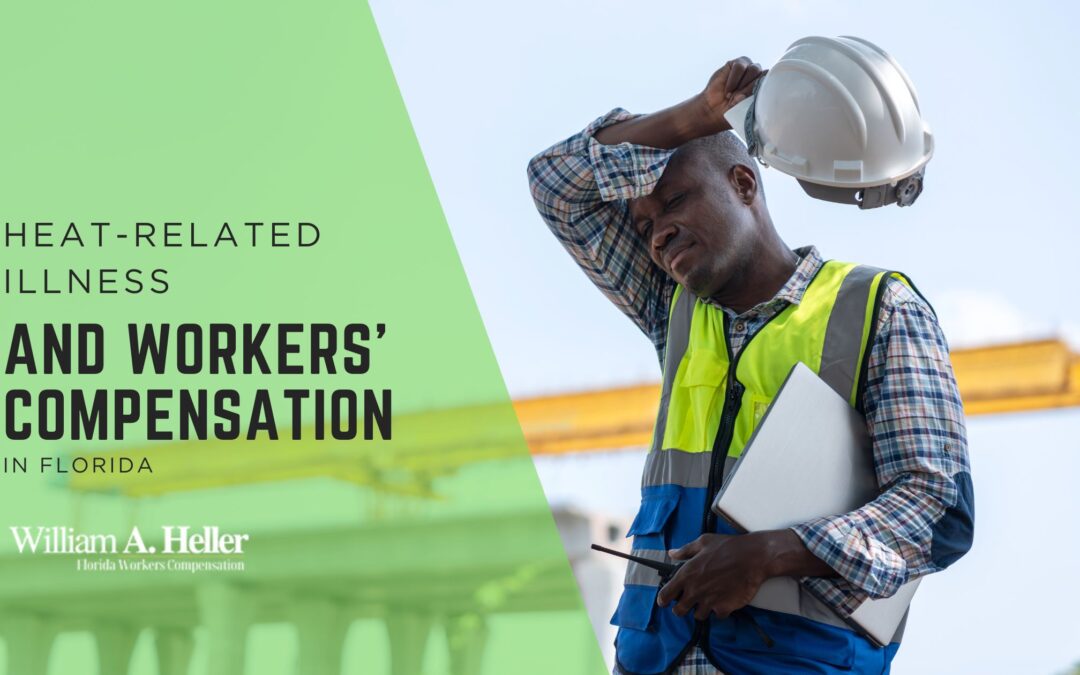
Florida’s summer heat is not just uncomfortable; it is a genuine occupational hazard for anyone who works outdoors or in a poorly ventilated indoor space. Construction crews, landscapers, agricultural workers, delivery drivers, and warehouse employees all face a real risk of heat exhaustion and heat stroke, and Florida law recognizes these conditions as compensable workplace injuries when they arise from job duties.
Heat-related illness develops differently than a sudden accident. Symptoms can start subtly, with dizziness, nausea, confusion, or muscle cramps, and may be mistaken for ordinary fatigue. Left untreated, heat exhaustion can progress into heat stroke, a medical emergency that can cause organ damage or worse. Because the line between a bad day in the heat and a genuine emergency is not always obvious, workers experiencing these symptoms should stop working and seek help right away.
Reporting a heat-related illness follows the same rules as any other workplace injury in Florida. The employer must be notified within 30 days of the incident, though with heat illness this is often immediate since symptoms tend to appear the same day. A prompt report, along with details about the temperature, work conditions, and any breaks or hydration provided, helps establish that the illness is connected to job duties.
Insurance carriers sometimes push back on heat-related claims by arguing that the worker had an unrelated medical condition or that the illness happened somewhere other than at work. This is one reason medical documentation matters so much. A doctor’s notes describing the diagnosis, the circumstances reported by the worker, and any lab results tying the condition to heat exposure can carry real weight if a claim is disputed.
Certain jobs carry a higher risk profile. Roofing, road construction, agriculture, and other outdoor work in direct sun during Florida’s hottest months are common sources of heat illness claims. Workers who spend long shifts in hot kitchens, laundry facilities, or non-air-conditioned warehouses face similar risks, even though the setting is indoors.
Florida workers’ compensation benefits for heat-related illness generally cover the same categories as other workplace injuries: medical treatment, a portion of lost wages if the worker cannot perform their job while recovering, and, in cases of lasting complications, benefits tied to any permanent impairment. Recovery time varies widely, from a short recovery after mild heat exhaustion to an extended absence following heat stroke with complications.
Employers are expected to take reasonable precautions, such as providing shade, water, and rest breaks, but the level of protection varies from workplace to workplace. When those precautions fall short and a worker becomes seriously ill from heat exposure on the job, the same reporting and documentation principles that apply to any other workplace injury apply here as well.
Attorney William A. Heller represents workers across South Florida whose injuries, including heat-related illnesses, have raised questions about coverage or been challenged by an insurance carrier. Anyone unsure whether their condition qualifies for workers’ compensation can benefit from a conversation with an experienced attorney about their specific situation.